
The Regulated
Mother
Build a nervous system that knows how to be calm even when life isn't.
A neuroscience-backed course for postpartum mothers who are anxious, overwhelmed, or disconnected and ready to restore a felt sense of safety within.
Enroll Now — $297Self-paced · Lifetime access · 23 video lessons · 8 guided audio practices
You love your baby more than you knew was possible. And somewhere along the way, that love merged with fear. The bigger it grows, the louder anxiety gets.
You're replaying the day at 3am, scanning for what you might have missed. You're bracing when things go well, because some part of you is always waiting for the other shoe to drop. The loop of worry has no endpoint. The what-if questions have no certain answers, but your mind keeps asking them anyway. Because to stop worrying and just trust feels impossible. Irresponsible, even.
Here's why it's so difficult to stop worrying postpartum: the roots of anxiety don't live in your thoughts. They live in your body. In a nervous system that's been through the hormonal changes of pregnancy and birth, severe sleep deprivation, and the overnight identity shift of becoming a mother.
That's an overwhelming amount of change.
And too much change too fast and too little normalcy for too long primes your nervous system to shift into a chronic state of dysregulation. And when the nervous system is dysregulated, the mind falsely believes that danger is always near and vigilance is the only way to keep the people you love safe.
Postpartum anxiety isn't a sign of a weak mind, it's a symptom of an overburdened nervous system. And the nervous system can be healed.
"The hormonal drop at birth is the largest sudden hormone change in the human life cycle, involving up to a 90% drop in progesterone and estrogen in a 48-hour time period. Your nervous system didn't overreact. It responded."
Most mothers in the postpartum period are told to rest more, stress less, ask for help. But no one explains what's actually happening in the body—why the anxiety feels so intrusive, why a single thought can pull you into a spiral before you've realized you took the bait, why you can both love your baby and mourn for your pre-birth life.
The common treatment approaches for postpartum anxiety work at the level of the thoughts. In other words, we try to fight the scary thoughts with more thoughts. Disproving them, preventing them, noticing them, disregarding them. But worrying is a mind-based symptom of a broader, body based pattern of dysregulation, and dysregulation lives in the nervous system. Which is why the most effective healing work begins in the body.
The Regulated Mother is based on this understanding.
Built on The 3R Method—Regulate, Rewire, Return to Resilience—this course teaches you the neuroscience of your postpartum nervous system in plain language, and walks you through a daily practice designed to change it.
If any of this is your life right now.
Three phases. One method.
A nervous system that always knows how to find the way home.
The Regulated Mother is built on The 3R Method: Regulate, Rewire, Return to Resilience. Each module builds on the last, moving you from understanding to practice to integration.
Before We Begin
A warm personal welcome, a tour of how to use the course, and a guided self-assessment that evaluates your nervous system baseline, so you can look back at the end and see how far you've come.
Regulate
Understand why your postpartum nervous system responds the way it does—the hormonal shifts, the sleep deprivation, the identity change of matrescence. Learn your three nervous system states and your window of tolerance. Then begin building safety from the inside out with Resilience Reps: ten-second body-based practices done with full attentional focus, accumulated daily toward 100 reps or about 17 minutes per day.
Rewire
Go beneath the surface symptoms to the patterns keeping dysregulation in place: the subconscious beliefs, the rumination loops, the reason one hard day can make you want to quit everything (spoiler alert: it's the habenula). Reconnect with your values as a compass and learn the Sacred Pause: the practice that creates space between stimulus and response. Begin reading your own tracking data with compassion instead of judgment.
Return to Resilience
Consolidate everything you've built. Redefine resilience not as toughness or bouncing back, but as the capacity to return—with increasing ease—to the safety of yourself. You'll leave this module with a complete personal toolkit, weeks of tracking data, and a clear sense of yourself as someone whose nervous system knows the way back to regulation. Because hard days will still come. The difference is you'll know what to do.
After the Course
A compassionate bonus lesson for the mother who senses something deeper is going on—a guide to knowing when 1:1 support is the right next step. Plus monthly live group Q&A calls, open to all students, recorded and added to the course library.
A complete toolkit for your
postpartum nervous system.
Video Lessons
Short, focused lessons averaging 6–8 minutes each—designed for real life. Watch on your phone, pause when the baby wakes up, come back when you can.
Guided Audio Practices
Somatic audio practices ranging from 10 to 20 minutes, designed to accompany your daily Resilience Rep practice. Each one designed to build parasympathetic capacity.
Printable Worksheets
From your starting self-assessment to your final Regulated Mother Toolkit, each worksheet creates something you keep: a map, a menu, a reflection of your own progress.
Live Q&A Calls
A 60-minute live group video call open to all current students, recorded and added to the course library. Bring your questions, your data, your hard days. Ashley responds live.
Lifetime Access
The postpartum period isn't a definitive timeline. You may need to revisit Module 1 on a hard week or return to an audio practice months from now. It's all there for you, whenever you need it.
When the Course Isn't Enough
A compassionate bonus lesson for the mother who senses something deeper is still present — honest guidance on recognizing when 1:1 support is the right next step.

I built this course because it’s the kind of evidence-backed postpartum support I wish I had after each of my girls were born. After two of the darkest, most grueling, and anxious seasons of my life, I promised myself I’d find a way out and when I did, I’d share it with other mothers. Because no mother should have to face that level of darkness alone.
I spent several months postpartum (x2) feeling like something was wrong with me. The anxiety, the overwhelm, the haunting intrusive thoughts. I was doing all the right things and nothing was working, because I didn't understand what was actually happening in my body.
After years of studying the neuroscience behind polyvagal theory, everything changed because it gave me a map. It gave me a way to stop fighting my thoughts and start regulating my nervous system. That's what The Regulated Mother is—the map I wish I'd had back then and the one that’s still just as useful now.
The science is real. The practices work. And you don't have to worry your way endlessly through early motherhood.
— Ashley Melillo, Founder of Mama AmourI know how heavy it feels to carry this fear. The postpartum period asks more of a mother’s nervous system than almost any other season of life, and it asks it at the exact moment when her resources are lowest. The worry that never fully quiets. The fear spirals that come without warning and leave you feeling agitated and confused. The exhaustion of a nervous system that’s been working so hard, for so long, trying to keep your baby safe and hoping to hold it all together without falling apart.
You’ve been doing your best. You’ve been trying your hardest. And the fact that the anxiety is still there isn’t evidence that you’re failing. It’s evidence that you haven’t had access to something that reaches the nervous system itself.
This course is that something. And I built it because I know the way through, not just as a professional, but as someone who’s sat exactly where you’re sitting right now.
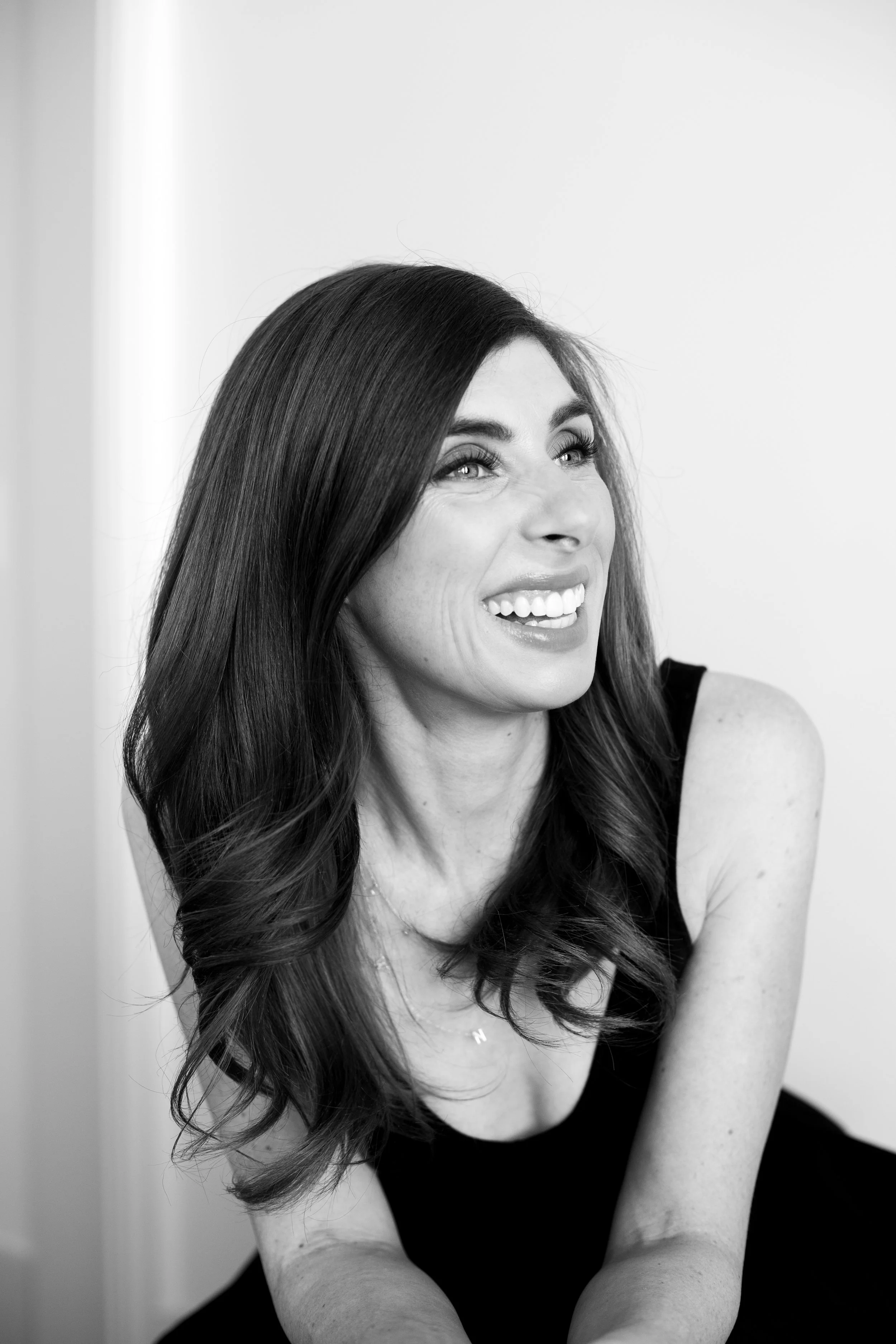
Hi, I’m Ashley.
I know how heavy the burden is that you’re carrying, because I’ve carried it before too—twice, actually.
I experienced postpartum OCD after the birth of both of my children. I know how convincing the fear feels, how relentless the mental loops become, and how isolating it is to carry the terror quietly while trying to care for a baby. I also know how upsetting it feels when your innocent newborn becomes the primary trigger for your worst fears.
I tried CBT. I tried mindfulness. I tried medication. I tried meditation. I tried EFT. I tried herbs and supplements. I tried special elimination diets. I tried ERP… twice. It all helped… for a while. But the fear kept finding new forms, new targets, new ways in. Because the work addressed the surface-level contents of the intrusive thoughts.
Trying to address the specific fears one at a time felt like playing a game of whack-a-mole I’d never win… there was always a new fear, always a new way for worry to take hold.
What began to change everything was learning to work at the level of the body. Building a daily practice that actually trained my nervous system toward safety, instead of merely trying to manage the anxious thoughts that stemmed from dysregulation. And pairing that with the deeper work of understanding the core subconscious patterns, programming, and unprocessed memories that had trained my nervous system to be on high-alert even when my life was good.
The Regulated Mother is the entry point to healing that I built from that understanding. Not as a course about coping with anxious thoughts. But as a course about your nervous system becoming genuinely, measurably different so that the worry has less power, the spirals have less grip, and you have more of yourself back. A nervous system that knows how to be calm, even when life isn’t.
I hold an Ed.S. in psychology, certifications in Rapid Transformational Therapy® and hypnotherapy, and I’ve hosted a psychology-focused podcast for four years. But the most important thing I bring to this work is that I’ve sat exactly where you are, and I know the way out.
Your nervous system learned what it learned. Now, it can learn something new—how to be calm, even when life isn’t.